WhatsApp
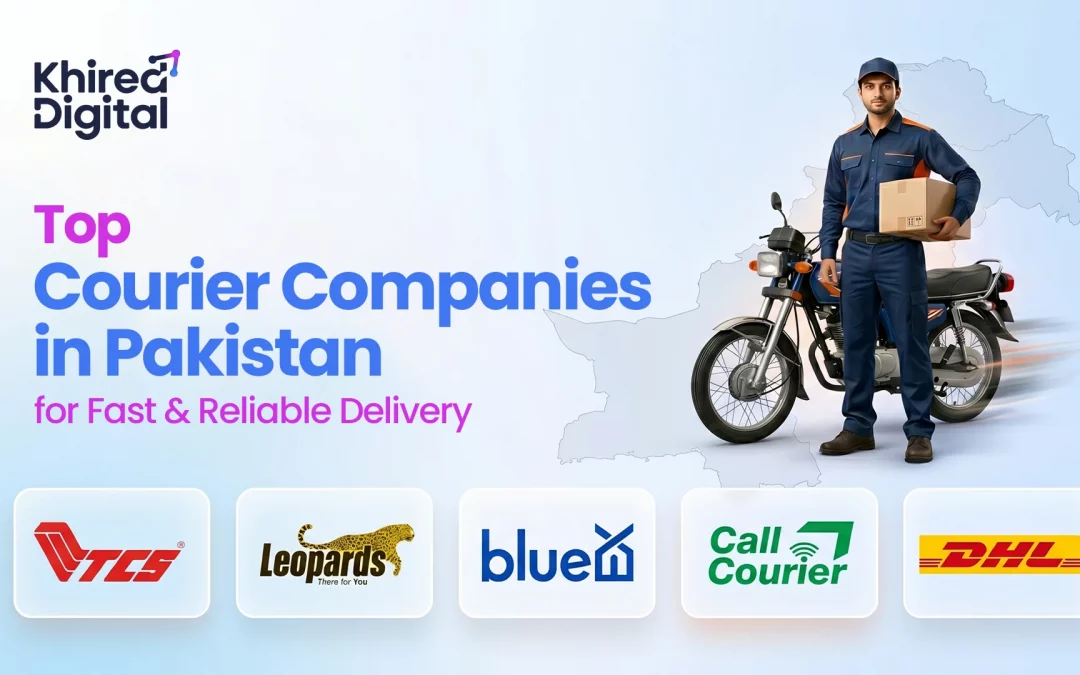
Top 10 Courier Companies in Pakistan for Fast And Reliable Delivery

Top 10 Courier Companies in Pakistan for Fast And Reliable Delivery

Whether it’s a gift across town or a parcel across continents—these couriers deliver. 

Ayesha runs a small online boutique from her home in Lahore. A customer in Islamabad orders a custom-designed dress for her wedding. Ayesha packs it carefully, prints the label, and hands it to the courier. Two days later, the customer posts a photo wearing the dress. She tagged Ayesha’s Instagram and appreciated her for the “lightning-fast delivery.” 

That customer becomes a repeat buyer. She tells five friends. Ayesha’s business in Pakistan grows.

This is the power of reliable courier services in Pakistan. In an era where e-commerce is booming, and customers expect instant gratification, your choice of delivery partner can make or break your business reputation. 

Pakistan’s courier industry has evolved dramatically. From traditional document delivery to specialized cod services in Pakistan, from domestic express to international courier services in Pakistan, there’s a solution for every need and budget. 

This comprehensive guide ranks the top 10 courier companies in Pakistan based on speed, reliability, coverage, pricing, and e-commerce capabilities. Whether you’re a small business owner, an overseas Pakistani sending gifts home, or an individual needing urgent document delivery, you’ll find your perfect match here.


Choosing the Right Courier Company in Pakistan 

Before we start discussing the list, consider these factors: 

Factor What to Look For 
Delivery Speed Same-day, next-day, or standard (2-5 days) 
Coverage Major cities only or remote areas included 
Tracking Real-time updates via SMS, WhatsApp, or web portal 
COD Services Essential for e-commerce businesses 
International Reach Destinations served and transit times 
Pricing Competitive rates for your parcel weight/size 
Customer Support Responsive helpline and claims process 
Special Handling Fragile, perishable, or high-value items 

Now, let’s meet the top players. 

Top 10 Courier Companies in Pakistan for 2026 

Whether you’re an e-commerce seller needing reliable COD settlements or an individual sending urgent documents across the country, the right courier partner makes all the difference. 

We’ve ranked the top 10 courier companies based on speed, coverage, pricing, to help you make an informed choice and specialized services in 2026. 

1. TCS (TCS Courier)

Best For: Overall reliability and nationwide coverage 

TCS is the undisputed leader among courier companies in Pakistan. With decades of experience, they have built the largest and most trusted courier network in the country. 

Key Features: 

  • Domestic Coverage: 800+ cities and towns 
  • International Coverage: 200+ countries via TCS International 
  • COD Services: Yes (TCS eSolutions for e-commerce) 
  • Tracking: Real-time online and SMS 
  • Special Services: Express, economical, fragile handling, warehousing 
  • Estimated Domestic Rate: PKR 250–500 for 1kg within same city 

Why choose TCS: They are the gold standard for reliability. Their e-commerce division (TCS eSolutions) offers end-to-end COD services in Pakistan, including cash collection and reconciliation. For businesses, their warehousing and fulfillment services are unmatched. 

2. Leopards Courier Services

Best For: Express delivery and competitive pricing 

Leopards has grown into a premier courier company with a vast network spanning thousands of locations across Pakistan. They are particularly strong in express nationwide delivery. 

Key Features: 

  • Domestic Coverage: 1,500+ locations 
  • International Coverage: Selected countries via Leopards International 
  • COD Services: Yes (Leopards Ecom) 
  • Tracking: Online tracking with mobile app 
  • Special Services: Same-day delivery (select cities), freight services 
  • Estimated Domestic Rate: PKR 200–450 for 1kg 

Why choose Leopards: They offer aggressive pricing without compromising on reliability. Their fastest courier service in Pakistan (same-day delivery) is available in major cities. For e-commerce businesses, their cash-on-delivery reconciliation is efficient. 

3. M&P (Muller & Phipps)

Best For: Professional handling and B2B logistics 

M&P is a trusted name in logistics, known for professional handling, express courier services, and robust B2B solutions. They excel in serving corporate clients with complex supply chain needs. 

Key Features: 

  • Domestic Coverage: Major cities and industrial zones 
  • International Coverage: Limited (focus on domestic/logistics) 
  • COD Services: Yes (for business clients) 
  • Tracking: Online portal for corporate accounts 
  • Special Services: Warehousing, inventory management, temperature-controlled shipping 
  • Estimated Domestic Rate: PKR 300–600 for 1kg 

Why choose M&P: If your business requires specialized handling (pharmaceuticals, perishables, high-value electronics), M&P’s expertise is invaluable. Their B2B focus means dedicated account management. 

4. BlueEX

Best For: E-commerce fulfillment and tech-driven delivery 

BlueEX revolutionized the courier industry by specializing exclusively in e-commerce fulfillment. They offer fast courier, advanced tracking, and efficient last-mile delivery services tailored for online sellers. 

Key Features:

  • Domestic Coverage: 500+ cities 
  • International Coverage: No 
  • COD Services: Yes (core competency) 
  • Tracking: Real-time via app and SMS (customer notifications) 
  • Special Services: COD reconciliation within 7 days, returns management, and COD insurance 
  • Estimated Domestic Rate: PKR 150–350 for 1kg (volume discounts) 

Why choose BlueEX: For e-commerce businesses, BlueEX is often the fastest courier service in Pakistan in terms of COD payout speed. Their technology platform (Merchant Portal) gives sellers complete visibility over orders, payments, and returns. 

5. Trax Courier

Best For: Tech-driven logistics and e-commerce coverage 

Trax has emerged as a serious competitor in the courier space, known for fast, tech-driven delivery solutions and strong e-commerce coverage across Pakistan. 

Key Features: 

  • Domestic Coverage: Rapidly expanding (300+ cities) 
  • International Coverage: No 
  • COD Services: Yes 
  • Tracking: Real-time with push notifications 
  • Special Services: API integration for e-commerce platforms, bulk pickup 
  • Estimated Domestic Rate: PKR 180–400 for 1kg 

Why choose Trax: Their API-first approach makes them ideal for tech-savvy businesses. You can integrate Trax directly into your Shopify, WooCommerce, or custom store. Tracking updates are frequent and accurate. 

6. SwyftCourier 

Best For: Quick service and growing network 

Swyft is a fast-growing logistics company known for quick service and reliable, efficient parcel delivery, particularly for e-commerce. They’ve built a reputation for responsiveness. 

Key Features: 

  • Domestic Coverage: Major cities (Karachi, Lahore, Islamabad, Rawalpindi, Faisalabad) 
  • International Coverage: No 
  • COD Services: Yes 
  • Tracking: Online and WhatsApp 
  • Special Services: Same-day delivery (select routes), COD with 5-7 day settlement 
  • Estimated Domestic Rate: PKR 150–350 for 1kg 

Why choose Swyft: They are highly responsive to customer queries. Their WhatsApp-based tracking is convenient for both businesses and end customers. Rates are competitive for high-volume shippers. 

7. Call Courier

Best For: Small businesses and cost-effective delivery 

Call Courier has become a popular choice for small businesses due to its cost-effective nationwide delivery and robust COD options. They are especially strong in serving smaller cities. 

Key Features: 

  • Domestic Coverage: 600+ cities (including smaller towns) 
  • International Coverage: No 
  • COD Services: Yes (core offering) 
  • Tracking: Online (basic) 
  • Special Services: COD insurance, reverse logistics 
  • Estimated Domestic Rate: PKR 120–300 for 1kg (very competitive) 

Why choose Call Courier: If you’re a small business owner watching every rupee, Call Courier offers the most attractive shipping rates from Pakistan to USA? (Domestic focus, but highly affordable locally). Their coverage of smaller towns is better than most competitors. 

8. SpeedeX

Best For: Backed by PIA for air speed 

SpeedeX is backed by PIA (Pakistan International Airlines), giving it unique access to air cargo networks. This translates to competitive rates and fast, secure deliveries, especially for time-sensitive packages. 

Key Features: 

  • Domestic Coverage: Nationwide (strong in major cities) 
  • International Coverage: Yes (via PIA cargo network) 
  • COD Services: Yes 
  • Tracking: Online 
  • Special Services: Air express, document delivery, freight 
  • Estimated Domestic Rate: PKR 250–500 for 1kg 

Why choose SpeedeX: For urgent documents or parcels requiring air transport, SpeedeX leverages its PIA partnership to offer faster transit times than road-based couriers. Their international network is a bonus. 

9. Linkers Logistics

Best For: Affordable domestic and international shipping 

Linkers Logistics is known for affordable, reliable domestic and international courier services, particularly excelling in major cities like Lahore, Karachi, and Islamabad. 

Key Features: 

  • Domestic Coverage: All major cities 
  • International Coverage: Yes (USA, UK, UAE, Canada, Europe, Australia) 
  • COD Services: Yes (domestic) 
  • Tracking: Online 
  • Special Services: Door-to-door international, freight consolidation 
  • Estimated International Rate: Competitive (quote required) 

Why choose Linkers: If you’re looking specifically for international courier services in Pakistan, Linkers offers competitive rates to the USA, UK, and UAE. They are a popular choice for overseas Pakistanis sending gifts or documents home. 

10. DHL Pakistan

Best For: International express and time-sensitive global shipping 

DHL is the global leader in international express courier services, providing secure, time-sensitive document and parcel shipping worldwide. For businesses with global clients, DHL is unmatched. 

Key Features: 

  • Domestic Coverage: Limited (focus on international outbound/inbound) 
  • International Coverage: 220+ countries and territories 
  • CODNo  Services: 
  • Tracking: Industry-leading real-time tracking 
  • Special Services: Temperature-controlled, dangerous goods, customs brokerage 
  • Estimated International Rate: Higher than competitors (premium service) 

Why choose DHL: When “fast” and “secure” are non-negotiable, DHL is the answer. Their transit times for shipping rates from Pakistan to USA are typically 2-3 business days. Customs clearance is handled professionally. For critical documents (passports, contracts, legal papers) and high-value parcels, DHL is worth the premium. 

Comparison Table: Top Courier Companies in Pakistan 

Company Best For Domestic Coverage International COD Services Tracking Starting Rate (1kg domestic) 
TCS Overall reliability 800+ cities Yes (200+ countries) Yes Real-time PKR 250–500 
Leopards Express delivery 1,500+ locations Yes Yes App-based PKR 200–450 
M&P B2B logistics Major cities Limited Yes Portal PKR 300–600 
BlueEX E-commerce COD 500+ cities No Yes (core) Real-time PKR 150–350 
Trax Tech integration 300+ cities No Yes Push notifications PKR 180–400 
Swyft Quick service Major cities No Yes WhatsApp PKR 150–350 
Call Courier Small business value 600+ cities No Yes Basic PKR 120–300 
SpeedeX Air express Nationwide Yes Yes Online PKR 250–500 
Linkers Affordable international Major cities Yes (USA, UK, UAE) Yes Online Quote required 
DHL International express Limited 220+ countries No Industry-best Premium 

International Courier Services in Pakistan 

If you need to send parcels or documents overseas, here’s how the top providers compare: 

Company Best For Transit Time to USA Price (1kg to USA) Tracking Customs Support 
DHL Urgent, high-value items 2-3 business days PKR 8,000–12,000 Excellent Full 
TCS Reliable mid-range 4-7 business days PKR 5,000–8,000 Good Basic 
Leopards Budget-conscious 5-10 business days PKR 4,000–7,000 Good Basic 
Linkers Affordable option 7-14 business days PKR 3,000–5,000 Fair Limited 

Tip for calculating shipping rates from Pakistan to USA: Use each courier’s online rate calculator. Rates depend on weight, dimensions, destination ZIP code, and declared value. For regular international shipping, consider opening a business account for discounted rates. 

COD Services in Pakistan for E-commerce 

For online businesses, Cash on Delivery (COD) is essential. Here’s how the top couriers compare on COD capabilities: 

BlueEX 

  • COD Settlement Time: 7 days 
  • COD Fee: 2-3% of order value 
  • Returns Handling: Yes (dedicated returns) 
  • Best For: High-volume e-commerce 

TCS eSolutions 

  • COD Settlement Time: 10-14 days 
  • COD Fee: 2-4% 
  • Returns Handling: Yes 
  • Best For: Established businesses 

Call Courier 

  • COD Settlement Time: 7-10 days 
  • COD Fee: 1.5-2.5% 
  • Returns Handling: Yes 
  • Best For: Small to medium businesses 

Leopards Ecom 

  • COD Settlement Time: 10-14 days 
  • COD Fee: 2-3% 
  • Returns Handling: Yes 
  • Best For: General e-commerce 

Trax 

  • COD Settlement Time: 7-10 days 
  • COD Fee: 2-3% 
  • Returns Handling: Yes 
  • Best For: Tech-savvy sellers 

Key consideration: Faster COD settlement improves your cash flow. BlueEX and Call Courier are known for quicker payouts (7 days), while traditional couriers may take 10-14 days. 

Which is the Fastest Courier Service in Pakistan? 

The answer depends on your route and service level: 

Scenario Fastest Option Estimated Time 
Same city (Karachi to Karachi) Leopards (same-day), TCS (express) 4-8 hours 
Major cities (Lahore to Islamabad) SpeedeX (air), Leopards (express) 24 hours 
Remote areas TCS (most reliable) 2-3 days 
International to USA DHL 2-3 business days 
International to UAE TCS, DHL 2-4 business days 

Verdict: For domestic, Leopards’ same-day service and SpeedeX’s air network are the fastest. For international, DHL is unmatched. 

Conclusion

The best courier company in Pakistan depends entirely on what you’re shipping, where it’s going, and how fast it needs to arrive. 

  • For e-commerce sellers: BlueEX or Call Courier for COD, fast settlements, and e-commerce features. 
  • For businesses needing reliability: TCS remains the gold standard. 
  • For urgent domestic deliveries: Leopards (same-day) or SpeedeX (air express). 
  • For international parcels: DHL for speed and security; TCS or Linkers for value. 
  • For small businesses on a budget: Call Courier offers the most competitive rates. 

Your business reputation depends on delivery. A late parcel or lost package can mean a lost customer forever. Test different couriers with small shipments, monitor their performance, and negotiate rates as your volume grows. 

In 2026, Pakistan’s courier industry offers more choice than ever. Use this guide to find your perfect delivery partner. 

Frequently Asked Questions

Which courier company is best for COD in Pakistan? 

BlueEX and Call Courier are widely considered the best for COD services. BlueEX specializes exclusively in e-commerce fulfillment with fast settlement (7 days) and excellent technology. Call Courier offers competitive COD fees (1.5-2.5%) and is very popular among small to medium-sized online businesses. TCS eSolutions remains a reliable choice for established businesses with higher volumes. 

What are the shipping rates from Pakistan to the USA? 

Shipping rates vary significantly by courier and weight: 

  • DHL: PKR 8,000–12,000 for 1kg (2-3 days) 
  • TCS: PKR 5,000–8,000 for 1kg (4-7 days) 
  • Leopards: PKR 4,000–7,000 for 1kg (5-10 days) 
  • Linkers: PKR 3,000–5,000 for 1kg (7-14 days) 

Use each courier’s online rate calculator for precise quotes. Business accounts or high-volume shipping can reduce costs by 20-40%. 

Which is the fastest courier service in Pakistan for domestic delivery? 

For same-city delivery, Leopards’ same-day service (available in Karachi, Lahore, Islamabad) is the fastest at 4-8 hours. For inter-city delivery, SpeedeX (backed by PIA air cargo) offers next-day delivery between major cities. TCS Express is also highly reliable for 24-hour delivery on major routes. 

Which courier companies in Pakistan offer international shipping? 

Several international courier services in Pakistan are available: 

  • DHL: Premium, fastest (220+ countries) 
  • TCS International: Reliable mid-range (200+ countries) 
  • Leopards International: Budget-friendly (selected countries) 
  • Linkers Logistics: Affordable to USA, UK, UAE, Canada 
  • SpeedeX: Via PIA cargo network 

For critical documents or high-value items, DHL is recommended. For regular parcels to family overseas, TCS or Linkers offer better value. 

Which courier is best for a small e-commerce business just starting? 

Call Courier is often the best choice for startups. They offer: 

  • Low minimum volume requirements (some couriers require 50+ daily orders) 
  • Competitive COD fees (1.5-2.5%) 
  • Fast settlement (7-10 days) 
  • Good coverage of smaller cities 

BlueEX is also excellent but may have higher volume requirements. Start with Call Courier, then negotiate better rates with BlueEX or TCS as you scale. 

How can I track my courier in real-time? 

Most major couriers offer real-time tracking: 

  • TCS, Leopards, BlueEX, Trax: Online portal with tracking numbers 
  • Swyft: WhatsApp-based tracking 
  • DHL: Industry-leading mobile app and SMS alerts 
  • Call Courier: Basic online tracking 

Always save your tracking number. For COD orders, use the merchant portal if you’re a seller.

How to Register a Company in Pakistan in 2026 (Complete Process)

How to Register a Company in Pakistan in 2026 (Complete Process)

On a quiet Sunday evening in Karachi, two friends—Zara and Ahmed—sat in a café sketching their business idea on a napkin. They wanted to launch an eco-friendly packaging startup. They had the name, the logo, and even their first potential client. But there was one problem: they weren’t “legal.” 

They assumed company registration would take months, require bribes, and involve endless visits to government offices. They were wrong. 

By Tuesday afternoon—just 48 hours later—they held a digital document that changed everything: their Certificate of Incorporation. They were now a legally registered private limited company. They could open a bank account, sign contracts, and invoice their first client. 

This is the reality of company registration in Pakistan in 2026. The Securities and Exchange Commission of Pakistan (SECP) has transformed the process into a streamlined, fully digital journey. With over 160,000 companies already registered, the system is proven, accessible, and faster than most entrepreneurs realize. 

Whether you’re a freelancer going formal, a startup founder, or an overseas Pakistani investing back home, this guide walks you through the complete process—step by step. 

Why Register? The Case for Going Formal

Before we dive into the “how,” let’s address the “why.” Many small businesses operate informally for years. But registration unlocks benefits you simply cannot get as an unregistered entity: 

  • Separate Legal Entity: Your company becomes distinct from you. If the business faces debt, your personal assets (your car and your house) are protected through limited liability. 
  • Credibility: Banks, investors, and large corporate clients prefer—or outright require—dealing with registered companies. 
  • Access to Financing: No bank will give a business loan to an unregistered sole proprietor operating on a whim. 
  • Tax Advantages: Registered companies can avail themselves of tax incentives and properly document their expenses. 
  • Perpetual Existence: Your company continues even if a founder leaves or passes away. 

In short, registration transforms a hobby into a business. 

Step 1: Choose Your Business Structure 

Pakistan offers several business structures. The right one depends on your goals, liability concerns, and number of partners.

Structure 

Best For 

Key Feature 

Registration Authority 

Sole Proprietorship 

Freelancers, small shops 

Simple, but unlimited personal liability 

FBR (NTN only) 

Partnership 

Professional firms (lawyers, accountants) 

Shared liability, simple compliance 

Registrar of Firms 

Single Member Company (SMC) 

Solo entrepreneurs wanting limited liability 

One shareholder, corporate protection 

SECP 

Private Limited Company 

Startups, SMEs, growth-focused businesses 

Limited liability, can attract investors 

SECP 

Public Limited Company 

Large corporations seeking public investment 

Can list on stock exchange 

SECP 

For most startups and growing businesses, the private limited company is the gold standard. It requires at least two shareholders and provides the strongest legal framework. 

Step 2: Create an Account on SECP eServices

All company registration in Pakistan now happens through the SECP eServices portal. The process is entirely online. 

  1. Visit the SECP eServices website. 
  2. Click “Sign up for Nationals and Foreigners/POC Holders.” 
  3. Fill in your personal details—CNIC/Passport, email, and mobile number. 
  4. After submission, you’ll receive a 4-digit PIN via email and SMS. This PIN, along with your CNIC and a password you create, becomes your login credentials.

Note for Overseas Pakistanis: You can complete this process remotely. You do not need to be physically present in Pakistan. 

Step 3: Reserve Your Company Name

This is often the trickiest part. Your company name must be unique and compliant with SECP guidelines. 

  • Propose 2-3 alternatives: SECP allows you to suggest multiple names. If your first choice is taken, they move to the next. 
  • Avoid restricted words: Terms like “bank,” “insurance,” or “trust” require special approvals. 
  • Keep it relevant: The name should reflect your business activity. 

Once approved, your name is reserved for 60 days, giving you time to complete the incorporation process. 

Step 4: Prepare Your Incorporation Documents 

With your name approved, it’s time to prepare the core legal documents.

Document 

Purpose 

Memorandum of Association (MoA) 

Defines the company’s objectives, what business it will do. 

Articles of Association (AoA) 

Sets internal rules—how directors are appointed, how meetings are held, share transfer rules. 

CNIC/Passport Copies 

Of all directors and shareholders. 

Registered Office Address Proof 

A utility bill or rent agreement for your business address. 

Director/Subscriber Details 

Names, fathers’ names, occupations, and shareholding percentages. 

Many first-timers hire a corporate lawyer or consultancy firm at this stage to ensure documents are drafted correctly, avoiding objections from SECP. 

Step 5: File Online and Pay Fees

Log back into the eServices portal and select “Certificate of Incorporation” from the form list. You will:

  1. Enter company details (address, contact, business nature).
  2. Provide details about your share capital (the minimum authorized capital is often PKR 100,000, but you can start higher). 
  3. Upload all prepared documents in PDF format. 
  4. Pay the registration fee online via credit/debit card, mobile wallet, or bank challan. 

Fee Structure: SECP fees depend on your authorized share capital. A fee calculator is available on the SECP website to help you estimate costs. 

Step 6: Verification and Certificate Issuance

Once submitted, SECP reviews your application. If documents are complete and accurate, approval is swift.

  • Typical Timeline: Name reservation takes 1-2 working days. Incorporation approval takes approximately 3-5 working days. In many cases, companies are incorporated within 1-3 working days after name approval. 
  • The Result: You will receive your Certificate of Incorporation via email. This document includes your Company’s Unique Identification Number (CUIN). Congratulations—your company legally exists!

Step 7: Post-Registration Compliance 

Getting the certificate is a milestone, but it’s not the finish line. You must now:

  1. Obtain NTN (National Tax Number): This is often auto-generated upon incorporation due to SECP-FBR integration. If not, you must register with the Federal Board of Revenue (FBR). 
  2. Open a Corporate Bank Account: Take your Certificate of Incorporation, MOA/AOA, and NTN to a bank to open an account in the company’s name. 
  3. Sales Tax Registration: If your business deals in taxable goods or services, register for sales tax with FBR. 
  4. Sector-Specific Licenses: Depending on your industry (e.g., healthcare, education, finance), you may need additional permits.

Step 8: Annual Compliance—Staying Active 

Registration is not a one-time event. To keep your company in good standing, you must file annual returns and financial statements with SECP. Changes in directors or share capital must also be reported. Failure to do so can result in penalties or even the strike-off of the company. 

The 2026 Advantage: Why Now is the Best Time

In 2026, registering a company in Pakistan is easier than ever. The SECP has launched Promoters’ Guides in 11 languages (including Arabic, Chinese, Turkish, and local languages like Sindhi and Pashto) to assist foreign and local entrepreneurs. The eZfile platform has simplified the process, and the number of statutory forms has been reduced from 75 to 28, eliminating duplication. 

For overseas Pakistanis, the process is fully remote. You can own 100% of your company without a local partner in most sectors. Pakistan’s consumer market of over 240 million people, competitive operational costs, and growing startup ecosystem make it an attractive destination for investment. 

Conclusion

Zara and Ahmed, the eco-packaging founders from our story, are now supplying to five major restaurants in Karachi. Their company is registered, their taxes are filed, and they’re planning to hire their first employee. 

None of this would have been possible without that 48-hour investment in registration. 

In 2026, the barriers to formalizing your business in Pakistan have crumbled. The process is digital, fast, and transparent. Whether you’re building the next tech unicorn or opening a neighborhood bakery, the first step is the same: make it legal. 

Ready to register your company but overwhelmed by the paperwork? 

You don’t have to navigate this alone. At Khired Digital, we connect you with experts who can handle your SECP registration, tax compliance, and digital presence—so you can focus on what you do best: building your business. 

Partner with Khired Digital Today and let’s make your business official.

Frequently Asked Questions

How long does it take to register a company in Pakistan? 

If your documents are complete, name reservation takes 1-2 working days, and full incorporation takes approximately 3-5 working days. Many companies are incorporated within a week. 

Can overseas Pakistanis register a company remotely? 

Yes, absolutely. The entire process can be completed online through SECP’s eServices portal. You do not need to visit Pakistan. You will need scanned copies of your passport and a registered address in Pakistan (which can be arranged through consultants). 

What is the minimum cost to register a private limited company? 

Costs vary based on authorized share capital. For a small startup with modest capital (e.g., PKR 100,000), the SECP filing fee is relatively nominal. Professional fees, if you hire a consultant, will add to the cost. Use SECP’s online fee calculator for an exact estimate.

10 Most Profitable Businesses in Pakistan for 2026 (And Why They Work)

10 Most Profitable Businesses in Pakistan for 2026 (And Why They Work)

The entrepreneurial scenario in Pakistan is undergoing a massive shift. 2026 will create major business prospects because Pakistan has a young population that uses technology, its digital infrastructure is expanding, and its economy is reaching stability after past economic fluctuations. From high-tech startups to traditional retail reimagined, the question on every aspiring entrepreneur’s mind is, “Where is the money flowing?” 

This guide presents the top 10 ventures that will achieve success this year for people who want the most profitable businesses in Pakistan or plan to operate small enterprises.

The 2026 Business Era: A Snapshot

Pakistan shows economic strength through its stock market success and the performance of its banking and oil industries. The actual development shows how business operations after 2026 will function through democratic systems. The rise of Vibe Coding lets anybody develop tech solutions, which has increased e-commerce business opportunities for small businesses with big profits in Pakistan.

Most Profitable Business in Pakistan

Here are the top 10 profitable business ideas for 2026.

1. Tech Freelancing & “VibeArchitect” Services

Why it’s profitable: Although the way software is developed has changed, the need for it worldwide is expanding. Using artificial intelligence to create code from simple English commands, vibe coding is transforming the business. This is about supercharging programmers rather than replacing them. 

The Opportunity: Pakistan freelancers, already among the best in the world, may now provide projects 3–5 times more quickly. Income for those who see themselves as vibe architects capable of directing artificial intelligence to produce sophisticated programs is skyrocketing. For those with little money but great logic and communication skills, Pakistan’s most lucrative business is possibly this one. 

Why 2026: As artificial intelligence gains mainstream acceptance, businesses demand quick, affordable growth.

2. E-Commerce & Specialized Dropshipping

Why it’s profitable: By 2027, Pakistan’s e-commerce business is expected to reach $18.7 billion. Without keeping any stock, the dropshipping approach lets you access this expansion.

The Opportunity: The major money in 2026 is in niche specialization—think eco-friendly home goods, premium pet accessories, or specific hobbyist supplies—rather than selling random gizmos. This is a prime example of a very lucrative business model enhanced by effective social media promotion.

Why 2026: Better logistics and digital payment systems are helping to control cash flow and customer expectations more easily.

3. Digital Freelancing Services (Beyond Tech)

Why it’s profitable: More outsourcing follows from rising worldwide corporations cutting expenses. Still at the top of destinations for this is Pakistan.

The Opportunity: High-demand abilities include content creation, graphic design, virtual aid, and digital marketing, among others. For individuals searching for Pakistan’s low-cost beginning, this is the best. You can assist customers in the Middle East, Europe, and the US with nothing more than a laptop and an internet connection.

Why 2026: The valuation of the Pakistani Rupee makes services very competitive globally; local demand from new companies is also increasing.

4. Food Delivery Kitchen (Cloud Kitchen)

Why it’s profitable: The food and beverage sector is a major force, yet high street rentals chip away at earnings. Cloud kitchens, restaurants that only offer delivery, provide a remedy for this.

The Opportunity: Start a brand focusing on a particular cuisine—like gourmet hamburgers, genuine Chinese, or nutritious meal preps—and list it on marketplaces like Foodpanda or Cheetay. You save a lot on personnel and interior design.

Why 2026: People are buying in more than ever because of urbanization and hectic lifestyles.

5. Specialized Education (Tutoring & EdTech)

Why it’s profitable: Given the great youthful population, the desire for education is insatiable. Parents will shell out a premium for good.

The Opportunity: Start a home-based tutoring program for subjects (Mathematics, Science, English) or exam prep (such as the SAT, ECAT). Offering structured internet learning, EdTech sites like Edversity and Edkasa are catching on the technical side.

Why 2026: The hybrid learning model is here to stay, and specialized skill development (like coding bootcamps for youngsters) is a tremendous growth area.

6. Logistics & Courier Services

Why it’s profitable: The earlier noted e-commerce revolution requires a delivery backbone. While companies like Oware and Bridge are simplifying logistics, local players still have opportunities. 

The Opportunity: Start modestly by concentrating on last-mile delivery in a particular region or metropolis. Collaborate with area online merchants, bakers, and florists searching for dependable same-day delivery. 

Why 2026: The volume of parcels is rising exponentially, and huge courier companies frequently find it difficult to equal the customized service of a local, nimble actor.

7. Professional Cleaning & Maintenance Services

Why it’s profitable: Time turns a luxury as dual-income households become more common in cities like Karachi, Lahore, and Islamabad. People are prepared to pay to outsource duties. 

The Opportunity: Provide professional cleaning for houses, businesses, or even post-construction cleaning. This can be expanded by staffing as you develop and calls for very little investment—basic cleaning supplies and equipment. 

Why 2026: Rising middle class and heightened awareness of cleanliness are driving demand for expert services.

8. B2B Raw Materials & Marketplace Platforms

Why it’s profitable: In the startup industry, B2B (Business-to-Business) is creating waves. Companies such as Tazah Technologies (linking farmers to businesses) and Zayare (a raw materials marketplace) are addressing major supply chain inefficiencies. 

The Opportunity: You don’t have to create an app. As a local aggregator, you can collect produce from tiny farmers and sell it to major cities or obtain scrap metal for industrial purchasers. 

Why 2026: The formalization of the economy is generating supply chain gaps that clever businesses can fill.

9. Health & Personal Care (Clinics and Pharmacies)

Why it’s profitable: Non-discretionary and growing is health spending. Startups like Dawaai (an internet pharmacy) have shown the potential; hence, affordable healthcare is essential.

The Opportunity: Open a tiny, specialist clinic (e.g., speech therapy, much like EKHO’s mission) or a diagnostics facility in a residential neighborhood. Alternatively, a local pharmacy that provides home delivery can develop a devoted, local clientele.

Why 2026: Growing health knowledge and the economy of convenience are converging.

10. Specialized Retail Kiosks & Mobile Accessories

Why it’s profitable: Retail does not have to entail a large store for those with very little money.

The Opportunity: Set up a small store in a bustling mall or market offering stylish clothes, unusual phone covers, or mobile accessories. The markup on these products is great; the starting inventory cost might be PKR 50,000. Pakistan’s small companies with great profit are best represented here.

Why 2026: Commercial areas with great foot traffic guarantee a constant supply of impulse customers.

Final Thoughts

The Pakistan business ideas for 2026 are varied and thrilling. Whether you choose the high-tech road of AI-powered development or the hands-on path of a local service business, the key to success is in addressing a genuine need for your clients. The most prosperous business owners will be those who meld local market knowledge with contemporary digital technologies.

Make the first move right now, and you might help Pakistan become the next major commercial success story.


Frequently Asked Questions

Which small business is most profitable in Pakistan?

While profitability depends on execution, food-related businesses (like cloud kitchens or home-based bakeries) and digital service freelancing consistently show the highest profit margins. Freelancing, in particular, has near-zero overhead, meaning most of what you earn is profit.

Which business is most profitable in Pakistan with low investment?

Dropshipping and digital marketing agencies top this list. With dropshipping, you don’t buy stock until you make a sale, and with a digital agency, your main asset is your expertise. You can start both with just the cost of a domain name and hosting (approx. PKR 15,000-20,000). 

What business can I start with 50,000 rupees in Pakistan?

PKR 50,000 is a solid starting budget for several ventures: 

  • Mobile Accessories Retail: Buy stock in bulk from wholesale markets like Hafeez Centre in Lahore or Saddar in Karachi.
  • Home-Based Food Production: Use the funds for quality ingredients and attractive packaging for homemade snacks or condiments.
  • Freelancing: Invest in a skill course online and market your services on Fiverr or Upwork.
  • Reselling: Buy products in demand (like clothing or shoes) from wholesalers and resell them on Instagram or Facebook Marketplace.
Is dropshipping legal in Pakistan?

Yes, dropshipping is completely legal. However, you must ensure you are not selling copyrighted or illegal items (like weapons). It is a legitimate business model where you act as the retailer, and your supplier handles the stock. 

What are the risks of starting a business in Pakistan in 2026?

The main challenges include navigating the regulatory landscape, dealing with fluctuating currency (which impacts import costs), and ensuring reliable payment processing for e-commerce. However, with the government showing commitment to facilitating startups and a growing digital infrastructure, the opportunities currently outweigh the risks. 

How to Start Blogging in Pakistan: A Complete Beginner’s Guide

How to Start Blogging in Pakistan: A Complete Beginner’s Guide

Did you know that over 80% of Pakistan’s internet users consume blogs, videos, or digital content every week? With over 71 million social media users in Pakistan (DataReportal 2025), there’s never been a better time to start your own blog — and turn your passion into profit.

A young professional in Lahore begins writing their encounters with Pakistani street cuisine. Their passion project develops into a full-fledged enterprise within months, drawing thousands of customers and producing significant revenue. This is the truth of contemporary Pakistani blogging, not a fantasy. 

There has never been a better time to begin your blogging adventure, as internet penetration reaches 5.56 billion users and digital literacy quickly increases. 

This comprehensive guide will help you every step of the way, whether you want to share your knowledge, establish a personal brand, or generate another source of income. 

Understanding Blogging

Through consistent updates on a specific website, blogging is the craft of disseminating your thoughts, experiences, and expertise. 

Imagine it as your own digital magazine where you are also the chief editor, author, and publisher. Blogging has grown from basic web diaries to strong forums that affect consumer behavior, shape ideas, and even propel societal transformation in Pakistan’s environment. 

Successful Pakistani bloggers such as Syed Balkhi and Mohammad Mustafa Ahmedzai have shown how consistent, valuable content may evolve from a pastime into a profitable job. The fundamental idea is that modern blogging mixes business strategy, community building, and digital marketing with writing.

Selecting Your Niche

Your specialized sector of the internet, where you will establish credibility and draw loyal readers, is your blogging niche. Rather than covering all ground, concentrate on issues on which you might provide original ideas. 

Some of the most popular areas in Pakistan are technological reviews, personal finance for Pakistanis, regional travel guides, Pakistani cuisine, and Islamic content.

Think about your interests, knowledge, and what Pakistani viewers are looking for. Your interests should match market demand to define a good niche. 

For instance, a blog highlighting “budget travel” in Northern Pakistan might draw both domestic and foreign audiences looking for inexpensive travel choices. 

Top 5 Blogging Platforms in Pakistan

Your blogging success depends on selecting the right platform. Five top choices for Pakistani newcomers are as follows:  

  1. WordPress.org: Offering complete customization and control, WordPress.org is the expert’s pick. You have full ownership of your material and can monetize it without restriction, albeit you must buy hosting (about $3-10 a month).  
  2. Blogger: For complete beginners, Google’s free platform is fantastic. Simple to use, but long-term provides little personalization and monetization possibilities.  
  3. Medium: Ideal for writers wishing only to concentrate on content. Though Pakistan’s monetization possibilities are constrained, you may start publishing right away and reach into an already established audience.  
  4. Wix: Perfect for small enterprises and visual bloggers seeking a polished appearance without technical ability. Wix is well-known for its drag-and-drop website builder.  
  5. WordPress.com: With several tiers appropriate for different budgets, the hosted form of WordPress website strikes a balance between simplicity of use and features.

Setting Up Your Blog

Beginning your blog includes several fundamental procedures anyone can follow:

  • Start by acquiring your domain name ($10–20 annually) via services such as Shopify, GoDaddy, or Namecheap. Pick a memorable, simple-to-spell name that is pertinent to your niche. 
  • Then choose dependable hosting. Pakistani-friendly companies like Hostinger or Bluehost provide inexpensive packages with excellent regional performance. Normally, fundamental shared hosting ranges from $2 to $10 a month.  
  • Install and modify your platform thereafter. Many hosts provide a one-click install if you go with WordPress.org.
  • Choose a responsive theme and build basic pages such as About, Contact, and Privacy Policy.  
  • Finally, plan your content approach. Choose your content categories, posting frequency, and create a content schedule to maintain consistency.

Creating Compelling Content

Good blogging centers on quality material. Relevant, genuine, and worthwhile material is valued by Pakistani viewers. Here are some tips:

  • Ensure your material engages your readers, answers questions, or helps to solve issues, whether you are writing on fashion, technology, or academics.
  • To keep your blog interesting, combine several types of content: how-to manuals, personal narratives, listicles, and video content.
  • Include pertinent keywords naturally to help search engines.
  • Always give readability and usefulness for your human readers as a priority.
  • Keep your content precise and worth reading.

Blogger Earnings in Pakistan

Blogging income in Pakistan has a vast range – from extra pocket money to full-time jobs. Usually, newbies expect $50-200/month in the first year, whereas the already known ones with massive traffic can earn $1,000-5,000/month or more. The possible income sources are: 

  • Google AdSense – By putting suitable ads on your blog 
  • Affiliate marketing – Selling the products and taking a percentage
  • Sponsored content – Brands paying for the article or review
  • Digital products – To sell e-books, courses, or templates 
  • Freelance opportunities – To use your blog as a portfolio to lure clients. 

Promoting Your Blog

Making extraordinary content is just the first step of the whole process. You have to let the readers know about it. Begin sharing it on social media platforms of choice in Pakistan, especially Facebook, Instagram, and Twitter. 

Become a member of the pertinent Pakistani Facebook groups and take part in the conversations without being annoying. Search engine optimization (SEO) is of great importance for your long-term progress—find out which keywords Pakistan users are searching for and adjust your content to that.

You can also consider guest posting on prominent Pakistani blogs to open the door to new audiences and entrench your position among other bloggers through online communities and local events.

Blogging Platform Comparison Table

Platform 

Cost 

Best For 

Pros 

Cons 

WordPress.org 

$50-150/year 

Serious bloggers 

Full control, unlimited monetization 

Technical learning curve 

Blogger 

Free 

Absolute beginners 

Easy setup, Google integration 

Limited features, less professional 

Medium 

Free 

Writers & journalists 

Built-in audience, simple interface 

Limited monetization in Pakistan 

Wix 

$5-25/month 

Visually focused blogs 

Beautiful templates, drag-and-drop builder 

Less SEO-friendly, platform lock-in 

WordPress.com 

$4-45/month 

Balance of ease & control 

Good features, reliable hosting 

Limited plugins on lower plans 

Final Thoughts

Blogging in Pakistan is not only an online avenue to narrate your thoughts but also a powerful tool to create a digital presence, network with people having similar interests, and earn a living, perhaps even a sustainable one. 

It all starts with the selection of the right platform and niche and goes through the development of valuable content and its effective promotion. Every move you make is one step closer to finding your exclusive voice in the digital universe. 

The path demands hard work and patience, but the potential rewards, both in personal and financial terms, are reasons enough to consider it a nice endeavor.

The most accomplished bloggers in Pakistan were in the same situation as you before: newbies but full of passion and with a vision still to be realized. Your blog can be a place where you can influence, earn, or just express your creative side—the opportunities are countless. 

Do you want to make your blogging wish come true? Contact Khired Digital now and get expert help on how to set up, optimize, and grow your blog in the Pakistani market!


Frequently Asked Questions

How much does it cost to start a blog in Pakistan?

A basic blog can be started at a minimum of $5-10/month for a domain and shared hosting. There are free platforms but they limit monetization options and look less professional.

When can I expect my first payment from blogging in Pakistan?

Majority of bloggers get their first money within 3-6 months of hard work and keeping the same routine. It usually takes 1-2 years of regular content creation and promotion to build a decent income.

Is it necessary to have technical skills to start a blog?

With today’s platforms, no technical skills are required. Just some basic computer knowledge and you’re good to go. Moreover, there are plenty of free resources to help you.

Product Hunting in Pakistan: Step-by-Step Guide

Product Hunting in Pakistan: Step-by-Step Guide

By the end of 2026, Pakistan’s e-commerce market is expected to surpass PKR 500 billion (~USD 1.8 billion), growing at a compound annual growth rate (CAGR) of 18–22%. 

Imagine scrolling through Daraz or Amazon and coming across that one smart gadget you never thought you needed, but suddenly, you just do!

That’s the power of product hunting. This new trend in Pakistan is fast gaining popularity amongst e-commerce entrepreneurs, drop shippers, and online marketers. With more and more people giving up on conventional shopping in favor of online shopping, finding the right product at the right time may well be the difference between success and failure.

In this guide, we’re going to discuss handling the product hunting process in Pakistan. Starting from market research to competitor analysis, we’ll highlight practical tactics to help you identify winning products that sell. 

What is Product Hunting?

Product hunting is a method of identifying high-demand, low-competition products that can be profitably launched online in marketplaces or e-commerce stores. The aim is to identify trends before they become saturated, ensuring a sense of competitive advantage.

For an individual in Pakistan, being able to effectively hunt products means taking advantage of local and global markets, understanding the buyer behavior, and seeking means to validate their findings.

Why Is Product Hunting Important in Pakistan?

The e-commerce trade of Pakistan is growing fast due to a permanent increase in smartphone penetration and the availability of cheap internet, coupled with a young populace that is inclined to shop online. Platforms like Daraz, Shopify, and Amazon etc., as well as local Instagram shops, have opened endless opportunities for the e-commerce market.

However, with the ongoing competition, selling random products will not yield returns.

A data-driven strategy is what you need to achieve the following:

  • Avoid dead stock in the line of losses.  
  • Keep your focus on profitable products.  
  • Change direction quickly into customer preference. 
  • Assist in creating an online business that is sustainable. 

Step-By-Step Guide for Product Hunting in Pakistan

Here are the steps you must follow for your product hunting: 

Step 1: Understand Your Market

Begin by identifying which niche you would like to target. Is it fashion, electronics, health & beauty, kitchen tools, or tech accessories? Demand patterns for every niche are unique.  

For instance, health-conscious buyers are increasingly interested in home fitness equipment, while students and young professionals are more inclined to look for cheap gadgets and accessories. 

Step 2: Use Product Hunting Tools

Several tools used in social media marketing facilitate product hunting, such as: 

  • Google Trends: Check search interest for individual products in Pakistan.
  • Sellerdash: Products trending within local boundaries like Daraz.
  • Amazon Best Sellers & Jungle Scout: Best suited for users targeting international customers.
  • Social Media (TikTok/Instagram Reels): Products that go viral often find their way here.

Example: A TikTok trend brought sales of portable blenders to the millions around the globe, as well as within Pakistan.

Step 3: Observe Demand and Competition 

Not all trending items will get you cash. Some of the questions to ask yourself are: 

  • Does this have consistent demand? 
  • How many sellers are already offering it? 
  • Can I offer any unique value: better price, faster delivery, or better quality? 

Assess competition levels with Daraz search results or Amazon reviews. Hundreds of sellers already selling the same product might not be worth it, unless you can differentiate. 

Step 4: Validate the Profit Margins

The product could be visually appealing but not a good one after analysing shipping, taxes, and marketing costs. 

For example:

  • Buying Price: Rs. 400 
  • Selling Price: Rs. 1000 
  • Marketing + Delivery Costs: Rs. 300 
  • Profit: Rs. 300 

So, target at least 25-40% profit margins to remain competitive. 

Step 5: Check Supplier Reliability

Having the best product doesn’t matter if you can’t provide quality. Use reliable suppliers to purchase your products, maybe local wholesalers or products sourced via AliExpress or directly from the manufacturer.  

If you are selling in Pakistan, you will commonly see different sourcing locations at wholesale markets in Lahore, Karachi, and Faisalabad.

Tip: One word to think about when sourcing is “samples.” Always collect samples of a product to try to evaluate its quality first, and before scaling. 

Step 6: Test Before You Scale

Don’t purchase large quantities right away. Keep it small for now. Try Facebook ads or TikTok ads or even promoting through Daraz to test the market. If the market is responsive, you can scale your orders. 

Example: A Lahore-based seller began testing LED ring lights in selling, say, 50 units to start. After consistently selling, he was eventually able to tack on an additional 100s of units time and time again monthly. 

Step 7: Follow Social Media Trends

In Pakistan, social media like TikTok, Instagram, and Facebook Marketplace use viral product selling like no one else. So, always look for hashtags that talk about #MadeInPakistan or #TrendingProducts to find products or items of interest that are trending.

For example, electric lunch boxes, mini projectors, and smart watches were some products that recently experienced major increases due to accelerated popularity via social media. 

 Step 8: Consider Seasonal Products

More than social media, Pakistan’s marketplace generally uses seasonal selling or festival selling. Here are just a few things to keep in mind: 

  • Winter: Heaters, jackets, coffee mugs. 
  • Summer: Air coolers, sunglasses, water bottles. 
  • Ramadan/Eid: Prayer mats, Islamic books, kitchen utensils. 

By searching for seasonal products, you can course correct to appropriately sell products timely. 

Step 9: Focus on Customer Reviews & Feedback

Always monitor what others are saying about similar products. You may sell a lot of low-quality products quickly but damage your long-term credibility. “Successful product hunters” will take the time to go through negative reviews to discover the opportunities. 

For example, if a lot of people complain that a product breaks easily, you can find a better quality version and very likely take over that niche. 

Step 10: Keep Innovating

Product hunting is not a one-off thing. Things happen quickly in the marketplace, and what is trending today might not be selling tomorrow, so make sure you are in the know, do your experiments, and wipe your product list at least once a month. 

Common Mistakes to Avoid

Let’s discuss some common mistakes that you must avoid in the product hunting process: 

Looking for Cheap Products 

Many new product hunters assume that the cheapest product in its category sells the fastest. It goes without saying that people like to save money, but this is not an excuse to sell low-quality products that will ultimately ruin your brand, generate no returns, and affect your growth negatively. Always weigh price vs value. 

Chasing High Sales 

High sales are fun to think about, but if your margins are too thin, you will barely make any profit. Remember to calculate your costs (purchase price, delivery costs, marketing costs) before you lock in a product. 

Copying Competitors Blindly 

It is very easy for new sellers to get tempted to replicate a product they see others successfully doing. But unless you provide SOMETHING different (better quality, better packaging, faster shipping), you might just be another option in the crowd. 

Not Validating your Demand 

The worst thing you can do is not do research and solely rely on your guess/assumption. You should use tools like Google Trends, check what is for sale on Daraz Best Sellers, and use Amazon data to confirm demand is steady over time before you purchase stock. 

Scaling too Quickly 

Let’s suppose you have ordered a product in bulk, but you did not verify the market first. Consider that you might have excess stock that would need to be disposed of, and the amount of capital is also wasted. If you need to make it work, you should test the order with small amounts and run ads or get a promotion going. Then you can scale, but only once you see that you can consistently respond to increasing demand. 

Final Thoughts

Product hunting in Pakistan is not simply about identifying a random product; it is about research, validation, and smart execution. By utilizing this step-by-step guide, you give yourself the greatest opportunity to minimize risk, increase profits, and differentiate yourself from competitors.

Therefore, if you are serious about your survival in the e-commerce industry, you should start hunting now. You never know, your next product may well be the next big of online sensation in Pakistan.


Frequently Asked Questions

What are the best niches for product hunting in Pakistan?

Popular niches include electronics, home & kitchen, health & beauty, and fashion accessories. Seasonal products perform well.

Can I do product hunting without paid tools?

Yes. Free resources like Google Trends, Daraz Best Sellers, and TikTok trends are great starting points. Paid tools just provide deeper insights.

Is product hunting profitable in Pakistan?

Absolutely. With smart research and proper execution, sellers can build sustainable online businesses. Profitability depends on choosing the right products and managing costs effectively.

International Payment Gateway in Pakistan: How to Get Paid Globally

International Payment Gateway in Pakistan: How to Get Paid Globally

Welcome To the Digital Borderless Economy 

In the borderless digital world, nothing is more irksome than getting paid by your distant international clients. Be they freelancers, SaaS providers, e-commerce merchants, or content creators, swift and secure global payment is either going to make or break their businesses. The catch, however, is that setting up an international payment gateway in Pakistan isn’t always that simple. 

Khired Digital is a full-service digital marketing company that swoops in to save you. This blog covers how to use the best payment gateway in Pakistan to capture global payments and build long-term trust with overseas clients in Pakistan. 

So, let’s start. 

What Is an International Payment Gateway? 

An international payment gateway is a facility for processing and authorizing international credit card payments and other electronic payments for international transactional purposes. It serves as a kind of bridge to maintain a secured and encrypted communication and streamlined transfer of funds from the buyer’s bank to that of the seller. 

In simple words, if you wish to sell your services or products to a worldwide audience, you need a payment method that would give foreign clients the ability to pay you in their respective currency, which will then be converted and deposited into your Pakistani bank account or digital wallet. 

Challenges of Receiving International Payments in Pakistan 

There are still many startups and SMEs that struggle with international payment processes, despite the high demand: 

  • Limited options: Services like Stripe and Square are very much not fully available to Pakistan. 
  • Stringent bank compliances: There are different stringent know-your-customer processes and other rules regarding foreign remittance. 
  • Hidden fees and delays: With international wire transfers, the typical case is that high transaction fees are paid against long times for transactions to settle. 
  • Lack of integration: Freelancers and e-commerce platforms might lack the means of getting a payment gateway integrated with their sites or apps. 

These barriers do impact scalability, especially for companies looking to do business with foreign clients or have remote operations. 

International Payment Gateway Options 

Let’s explore the breakdown of payment gateways, whether they are available in Pakistan or not. Also, to what extent these can e edbusand how these can be used.

Payment Gateway Official Availability in Pakistan Use Cases Key Features Used By 
Payoneer Yes Freelancing, eCommerce, SaaS Multi-currency accounts, global payments, local withdrawals Freelancers, Fiverr, Upwork users 
2Checkout (Verifone) Yes (with compliance) SaaS, eCommerce, Subscription Billing Accepts global cards, recurring billing, localized checkout Shopify stores, SaaS apps 
Wise (formerly TransferWise) Limited but accessible Freelancers, remote workers Real exchange rates, borderless accounts Freelancers, consultants 
PayPal Not officially supported Limited workaround use Buyer protection, global reach Used via foreign entities only 
Stripe Not supported natively Workaround via foreign registration Developer-friendly APIs, global cards SaaS platforms, subscription sites 
Braintree (PayPal) Requires U.S. or UK registration Web & mobile payments PayPal integration, secure checkout, advanced fraud tools Ecommerce stores, SaaS businesses 
Adyen Requires global registration Large enterprises, marketplaces Omnichannel support, international cards, scalability Large-scale platforms, enterprise 
Skrill Limited use Niche ecommerce, gaming Wallets, global payments, low-fee options Digital service sellers 
Authorize.Net Not directly available U.S.-based businesses only Subscription billing, fraud detection Used via U.S. incorporation 
Square  U.S./CA/AU/UK only Not available in PK POS & online payments, hardware solutions Not used in Pakistan natively 

Khired Digital works through clients to recommend, set up, and optimize these gateways subject to business models- service provider, SaaS startup, or ecommerce venture. 

How Khired Digital Simplifies International Payments 

Khired Digital, a trusted digital marketing agency and a tech partner, offers much more than development and marketing. To give end-to-end support for the integration of global payment gateways, we offer: 

  • Compliance Consulting: Understanding documentation, KYC, and legal setups. 
  • Platform Integration: You need Payoneer on your WooCommerce site? Or stripe through an overseas entity? We will do it for you. 
  • Speed Optimization: Faster settlements, API integration, and customized dashboards. 
  • Multi-channel Revenue Mapping: Sync payments from Shopify, YouTube, freelance platforms, and SaaS apps. 

Whether monetizing content, running your drop shipping store, or perhaps providing SEO services globally, we make sure your revenue stream is on point. 

Who Needs This Method?  

Basically, every digital entrepreneur or company with an interest in cross-border operations could use some help from it: 

  • Freelancers & Agencies 

From writers to developers, working with Upwork, Fiverr, or direct contracts, getting USD payments efficiently is important. 

  • Ecommerce Stores 

Selling on Etsy, Shopify, or your own branded website? You need to collect payments in dollars, euros, or dirhams. 

  • SaaS Startups 

Subscription models depend on recurring billing across countries. A reliable gateway is the backbone of your MRR. 

  • Affiliate Marketers & Content Creators 

YouTube payouts, affiliate commissions, and digital ad revenues are all foreign-earned income. You need a gateway that scales with traffic. 

Best Practices for Getting Paid Internationally 

To make the most of your setup, follow these smart practices: 

  • Set up a Business Entity (if needed) 

Services like Stripe require U.S. or U.K.-based business accounts. Many agencies help with virtual entity setup. 

  • Choose Multi-Currency Support 

Use services like Wise or Payoneer that let you hold balances in USD, GBP, or EUR and convert when the rate is favourable. 

  • Automate Invoicing & Payouts 

Use tools like FreshBooks, Zoho, or HubSpot CRM integrated with your gateway for seamless invoicing and payment tracking. 

  • Secure & Optimize Your Website 

SSL certification, responsive design, and secure checkout matter when building trust with foreign buyers. This ties into website development in Pakistan. 

  • Track Revenue Analytics 

Use plugins or tools like Google Analytics 4 and payment dashboards to understand buyer behaviour and revenue trends. 

The Role of Digital Marketing in Attracting International Clients 

Having a payment gateway is one half of the solution. You also need international clients who want to pay you. 

This is where SEO agencies in Pakistan shine. They boost your global visibility through: 

  • SEO-optimized websites and landing pages 
  • Paid ad campaigns targeting U.S., U.K., and Gulf clients 
  • Conversion optimization for better lead generation 

When marketing and payments work in sync, the result is sustainable international revenue. 

Future of Payment Gateway 

The landscape is evolving rapidly. With the rise of fintech startups, digital wallets, and open banking, more seamless options will emerge. SadaPay, NayaPay, and digital bank integrations will soon compete on a global level. 

With Pakistan’s digital economy growing, international payments will become as easy as sending an SMS. 

Final Thoughts 

In a world where digital work and cross-border commerce are booming, having an international payment gateway in Pakistan is no longer optional—it’s essential. Whether you’re a content creator, service provider, or e-commerce seller, getting paid globally with minimal friction unlocks new growth. 

With Khired Digital as your partner, you don’t just get payment integration—you get peace of mind and security. 

So, wait what? 

Let us help you choose and set up the best payment gateway in Pakistan tailored to your business. From e-commerce integrations to organizational payouts—we’ll get you paid, fast and fair.

al for fraud if not managed properly.


Frequently Asked Questions


Which international wallet works in Pakistan?

The best digital wallet depends on your needs. SadaPay is a top choice for secure, fee-free local and international payments in Pakistan.

Which is the safest payment gateway?

Best payment gateway options compared 

  • Stripe 
  • PayPal 
  • Square 
  • Payoneer 
  • Adyen 
  • 2Checkout 
  • Braintree
What are the advantages and disadvantages of a payment gateway?

Advantages include the ability to accept a range of payment methods, secure transactions, and potentially better customer experience. Disadvantages include fees, complexity of integration, and potential for fraud if not managed properly.