

Imagine this: You’re craving Italian food and ask your smart speaker, “What’s the best Italian restaurant near me?” Instead of a list of links, a calm voice responds, “Based on reviews, Trattoria Roma on Main Street is highly recommended for its authentic pasta and cozy atmosphere.”
You never see a website. You never click a link. Yet a restaurant just got your business without you ever visiting their site. This is the new reality of search, powered by Answer Engine Optimization (AEO). The days of scrolling through blue links are fading.
Welcome to the era of instant answers!!!
What Is Answer Engine Optimization?
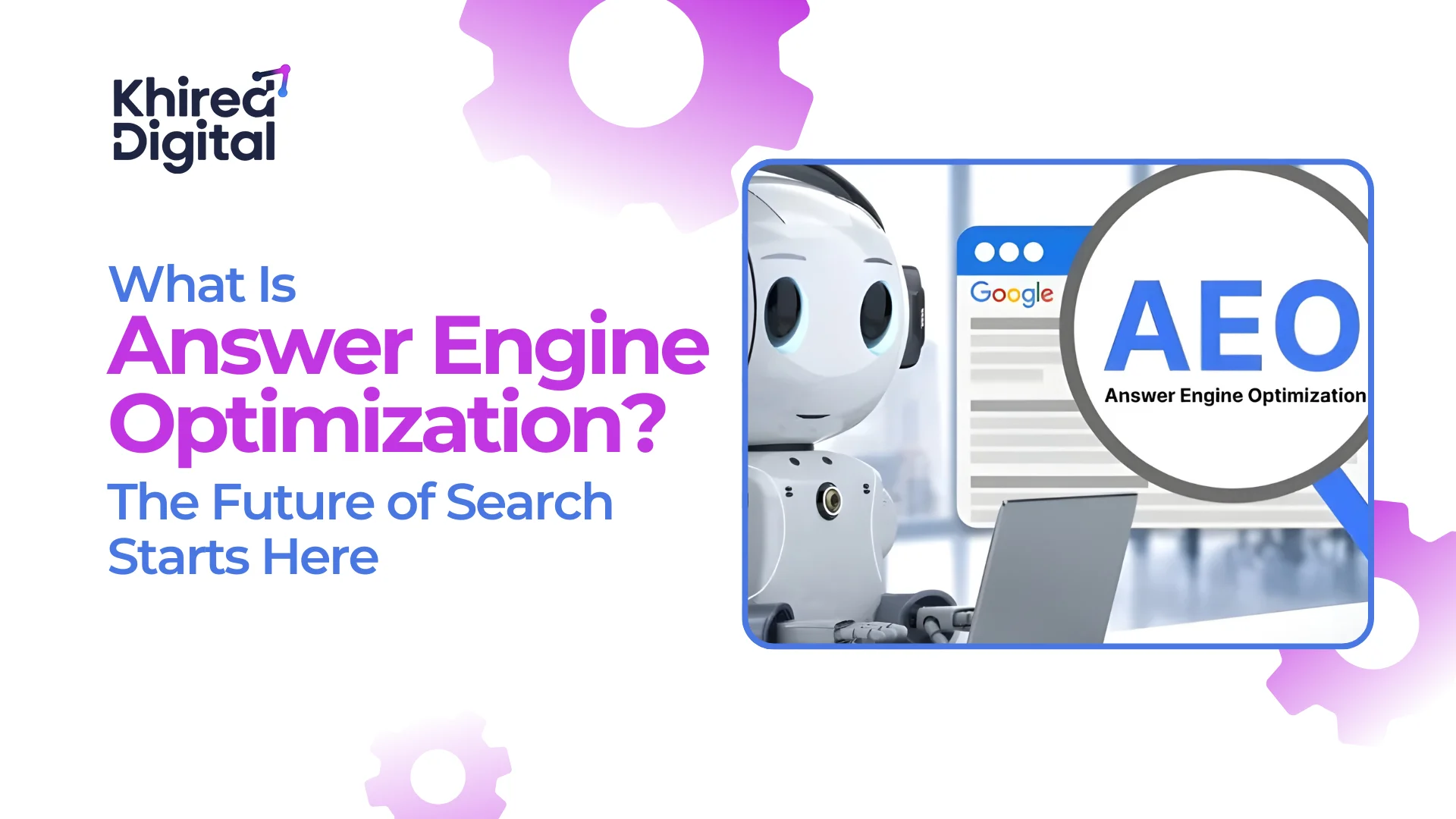
Answer Engine Optimization (AEO) is the practice of optimizing your content so it’s easily discovered, understood, and cited by AI-powered answer engines like Google’s AI Overviews, ChatGPT, Perplexity, Amazon Alexa, and Apple’s Siri. Unlike traditional search engines that return a list of website links for users to click and explore, answer engines provide immediate, concise, direct answers to user questions—often without requiring any click at all.
Think of it this way: if traditional search engines are like library catalogs pointing you to books on a shelf, answer engines are like knowledgeable librarians who simply tell you the answer. Your goal with AEO is to become the source that the librarian trusts and quotes.
How Is Answer Engine Optimization Different from SEO?
This is where many marketers get confused. While AEO and traditional SEO share some common ground, they serve fundamentally different purposes and operate on different mechanics.
| Aspect | Traditional SEO | Answer Engine Optimization (AEO) |
| Primary Goal | Rank higher in search results to drive clicks | Become the cited source in direct AI answers |
| Success Metric | Impressions, clicks, organic traffic | Citation frequency, share of voice in AI responses |
| Content Focus | Keyword density, backlinks, page authority | Direct answers, structured data, factual consensus |
| User Experience | Users click through to browse your site | Users get answers immediately without clicking |
| Key Mechanism | Link-based authority and keyword matching | Entity recognition and semantic understanding |
Traditional search engines retrieve documents containing keywords and leave users to extract answers themselves. Answer engines, however, understand intent, synthesize information from multiple trusted sources, and generate complete responses.
This fundamental shift means ranking #1 on Google matters little if an AI Overview sits above your link and users never scroll down to see it. In fact, zero-click searches now represent approximately 59% of Google searches, and when AI Overviews appear, click-through rates can drop to just 8%.
Why AEO Matters Now: The Stats You Can’t Ignore
The shift to answer engines isn’t coming—it’s already here. Consider these eye-opening statistics:
- 59% of searches now end without a click to a website, as users find answers directly on search results pages.
- Gartner predicts that 25% of organic traffic will shift to AI chatbots and virtual agents by 2026.
- Perplexity AI processed 780 million queries in May 2025, tripling its volume from mid-2024.
- Among users who have adopted AI for search, 79% believe it offers a better experience than traditional search engines.
The bottom line? Brands that ignore AEO risk are disappearing from these “zero-click” experiences entirely, even if their traditional SEO remains strong.
How Answer Engines Work: The Three-Phase Process
To optimize for answer engines, you must first understand how they process information. AI models work through three distinct phases:
Phase 1: Entity Identification Systems crawl content to identify entities—people, places, concepts, and brands—rather than just matching keywords. This entity recognition helps AI understand relationships and context beyond simple word matching.
Phase 2: Semantic Analysis Next, semantic analysis determines how entities connect and assesses source credibility based on consensus across the web. AI evaluates whether multiple authoritative sources agree on facts before including them in responses.
Phase 3: Information Synthesis Finally, the model synthesizes verified information into coherent, conversational answers. This synthesis phase determines whether your content becomes the cited source or gets overlooked entirely.
How to Use Answer Engine Optimization
Ready to optimize for answer engines? Here’s your actionable playbook for 2026.
1. Build a Question Inventory
Start by researching the exact questions your audience asks. Pull queries from sales calls, support tickets, and customer onboarding notes. Then check Google’s “People Also Ask” sections and AI Overviews to see which questions Google already treats as answer-worthy. Capture the wording exactly minor phrasing differences affect whether AI models reuse your content.
2. Lead with Direct Answers
Once you know which questions matter, structure your content so the answer appears immediately. Place the answer right after the question header—don’t preface it with background or transitions. Keep answers concise, ideally 40-60 words, and ensure they stand alone. If someone reads only that paragraph, the answer should still make complete sense.
For example, if the query is “How do I set up a personal cloud server?” begin with: “To set up a personal cloud server, you must first choose your hardware, install server software, configure network settings, and establish remote access protocols.”
3. Implement Schema Markup
Structured data tells answer engines exactly what your content means. Priority schema types for AEO include:
- FAQ Schema: Feeds question-and-answer pairs directly into AI databases
- HowTo Schema: Structures step-by-step processes
- Article Schema: Defines authorship and publication details
- Organization Schema: Establishes brand identity and credentials
4. Write for Conversational Queries
Voice and AI searches use natural, conversational language. Instead of optimizing for “best CRM software,” create content that answers “What’s the best CRM for small businesses with limited budgets?” Use question-based headings (H2s and H3s) that match exactly what users ask.
5. Build External Authority
Answer engines don’t rely solely on your site. They look for brand mentions across sources they already trust—industry publications, review sites, and professional platforms. A single quoted insight in a respected outlet can outweigh multiple posts on your own blog. Prioritize digital PR, guest contributions, and earned media in trusted publications.
6. Refresh Content Regularly
Content freshness is critical for answer engines. Update your best-performing pages quarterly to keep information younger than 90 days old. Add “last updated” timestamps to all content pages so AI systems can easily determine freshness.
Measuring AEO Success
Traditional metrics like rankings and clicks lose relevance when users get answers without visiting your site. Instead, track these AEO-specific KPIs:
- Citation Frequency: How often AI platforms reference your content as a source
- Share of Voice: Percentage of AI responses that mention your brand versus competitors
- Answer Inclusion Rate: How frequently your content appears in AI-generated answers
- Brand Mention Sentiment: The context and tone when AI discusses your organization
- Referral Traffic from AI Tools: Visits originating from ChatGPT, Perplexity, or AI Overview citations
Final Thoughts
The shift from search engines to answer engines represents the most fundamental change in digital marketing since Google’s rise. Users no longer want lists of links—they want immediate, trustworthy answers. By adopting Answer Engine Optimization, you position your brand not just to be found but to be the trusted source that AI systems choose when answering the questions that matter most to your customers.
This isn’t about abandoning everything you know about SEO. It’s about evolving your strategy to meet users where they’re going—into a world where the best answer wins, regardless of who clicks.
Ready to future-proof your digital presence and dominate AI-powered search? Partner with Khired Digital to develop a comprehensive AEO strategy that gets your brand cited, trusted, and chosen in the age of instant answers.
Frequently Asked Questions
Will AEO replace traditional SEO?
No—AEO complements SEO rather than replacing it. Traditional search still matters for long-form content, brand discovery, and users who prefer browsing. The smartest strategy optimizes for both: use SEO for rankings and visibility, and AEO for citations in direct answers.
How long does it take to see results from AEO?
Results depend on your content’s existing visibility. Pages that already earn impressions often show changes within weeks after adding direct answers and schema markup. Building external authority through earned media takes longer but compounds over time.
Do AI Overviews really reduce website traffic?
Yes—studies show click-through rates drop significantly when AI Overviews appear. However, traffic from AI citations is often more qualified. At Webflow, they found AI search traffic was 6 times more likely to convert than non-brand SEO traffic, because users who click through already have the information they need to make decisions.

0 Comments