

Companies that balance push and pull strategies see 73% higher customer retention rates compared to those using only one approach.
Choosing the best marketing approach in the cutthroat environment of contemporary business will either help or destroy your sales targets. Two basic approaches—push and pull strategies—dominate the marketing sector.
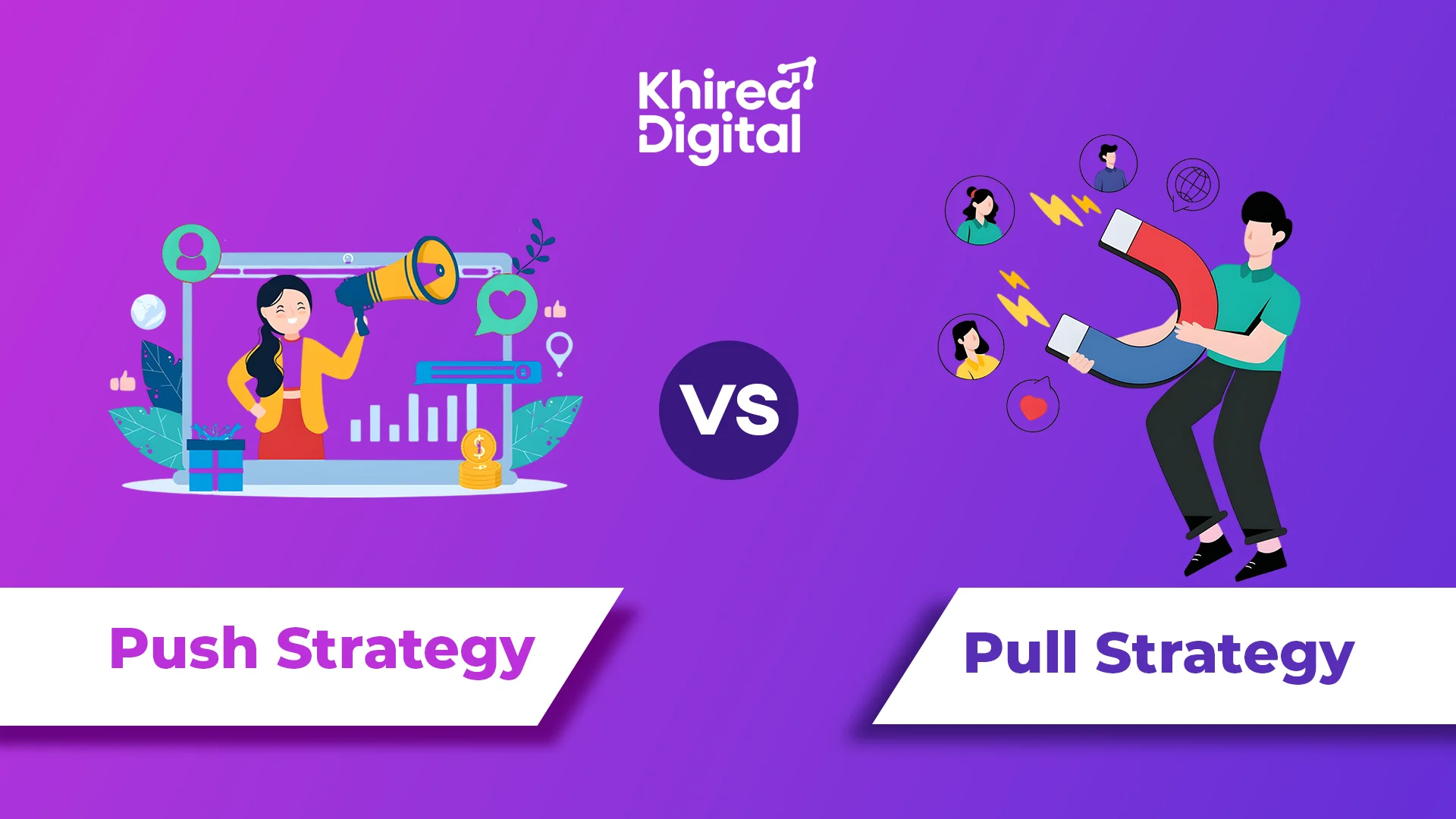
Push marketing uses push techniques to show consumers products; pull marketing draws customers naturally via brand appeal and relevant material. Which technique, then, really results in more sales?
The response is not uncomplicated. For various companies, sectors, and goals, both approaches have been shown to be effective. Knowing when and how to apply every approach is essential if you want to maximize your return on investment and reach long-term development.
Push Marketing Strategy
Push marketing is a proactive approach whereby companies directly advertise their goods or services to customers. Whether or not they are actively looking for solutions, the objective is to push goods over several channels to reach possible consumers.
Among the most often used push marketing strategies are:
- Radio and television commercials
- Campaigns in direct mail
- Trade shows offer
- Displays at the point of sale
- Outbound Sales and Cold Calling
- Paid social media advertising
- Email marketing to acquired lists
Push marketing campaigns can generate ROI within 24-48 hours, with email marketing averaging $42 for every $1 spent when targeting the right audience.
For fresh product launches, seasonal campaigns, and establishing first brand awareness, this plan is especially effective. Companies employ push marketing when they need quick exposure and want to manage the message consumers receive.
Push marketing’s main benefit is speed. Companies may quickly create awareness and boost current sales. This method, however, may have consumer resistance and demands a lot of money. It also could be seen as disruptive.
Pull Marketing Strategy
With the opposite approach, pull marketing aims at setting circumstances that draw consumers naturally to seek out your brand. Businesses develop distinctive brands, produce pertinent material, and maximize their exposure to attract curious customers rather than forcing messages on them.
Major pull marketing strategies are:
- Search engine optimization (SEO)
- Blogging and content marketing
- Organic social media activity
- Word-of-mouth promotion
- Relationships between influencers
- Comments and testimonials from customers
- Webinars and learning materials
Websites with blogs generate 67% more leads than those without.
Long-term client relationships and brand authority development are where pull marketing really shines. Usually, consumers that find your business via their own investigation are better qualified leads with greater purchase intent.
Over time, pull marketing’s cost-effectiveness is the major benefit. Organic traffic and brand reputation keep producing leads without ongoing advertising costs once they are created. This approach calls for patience, though, since outcomes usually take months to manifest.
Key Differences Between Push and Pull Marketing
Understanding the fundamental differences helps businesses make informed decisions about resource allocation. The following table highlights the major distinctions between these two approaches:
| Aspect | Push Marketing | Pull Marketing |
| Approach | Proactive and outbound | Reactive and inbound |
| Direction | Brand pushes to consumers | Consumers come to brand |
| Speed of Results | Immediate and fast | Gradual and slow |
| Cost Structure | Ongoing advertising expenses | Upfront content investment |
| Customer Intent | Targets broad audiences | Reaches interested buyers |
| Conversion Rates | Generally lower | Typically higher |
| Control Level | High control over messaging | Depends on algorithms |
| Longevity | Short-term impact | Long-term sustainability |
| Customer Relationship | Transactional focus | Relationship building |
| Best For | New launches, promotions | Brand authority, loyalty |
| Examples | TV ads, cold calls, PPC | SEO, blogs, social media |
This comparison clearly shows that neither strategy is inherently superior. Each serves different purposes and delivers unique advantages depending on business circumstances.
Which Strategy Drives More Sales?
The straightforward answer is: it varies depending on your circumstances. There is no one-size-fits-all superiority for either approach. Your success depends on several elements, including your sector, target market, financial plan, and schedule.
Research shows that 81% of shoppers conduct online research before making a purchase, indicating the critical importance of a pull marketing presence.
Conversely, 49% of impulse purchases happen due to push marketing tactics like in-store promotions and targeted ads. The average customer now requires almost 28.8 touchpoints before making a purchase decision—a combination of both push and pull interactions.
Push marketing usually produces more immediate sales when:
- New product launches lacking any prior knowledge
- Encouragement of seasonal efforts or time-sensitive offers
- Entering fresh markets swiftly
- Reaching audiences not familiar with your field
Producing more long-lasting sales, pull marketing works best when:
- Developing enduring consumer relationships counts.
- Your audience conducts research before buying.
- Budget restrictions limit constant advertising spending.
- Setting thought leadership sets apart your business.
Studies reveal that companies using both methods get the greatest results. Recent marketing research according to metamktg agency, shows that companies employing integrated techniques have client acquisition rates up to 25% higher than those depending only on single tactics.
Developing an Even Marketing Strategy
Good marketers combine both push and pull strategically; they do not have to pick one over the other. Think of this framework for best outcomes:
Begin with Pull Foundations
Create social media visibility, improve your website, and develop your content library. These resources provide long-term value and help to lessen reliance on paid advertising.
Push for Acceleration
Use push strategies to launch fresh products, capture seasonal chances, or boost top-performing content. Accelerating visibility, push marketing supplements pull efforts.
Measure and Correct
Monitor performance indicators for both approaches. Evaluate conversion rates, lifetime value, and customer acquisition expenses to constantly improve your marketing mix.
Match with Customer Journey
For awareness stages, employ push marketing; use pull marketing for decision and consideration phases. This correspondence links messages with customer willingness.
Final Thoughts
There is not a clear winner in the push vs. pull marketing argument. When applied properly and consistent with company goals, both methods help to boost revenue. While pull marketing builds sustainable growth and devoted customer bases, push marketing is great at creating instant results and introducing new goods.
The most successful digial marketing companies understand that marketing is not an ethic or proposition. Companies build all-around strategies that seize current possibilities and establish long-term brand equity by carefully combining push and pull strategies.
Ultimately, the approach that best fits your particular company needs, audience preferences, and expansion schedule drives more sales.
Ready to Change Your Marketing Outcome?
Partner with Khired Digital for tailored marketing plans fusing the best of both worlds. Our experts use data-driven strategies customized to your unique objectives to help companies maximize revenues.
Frequently Asked Questions
Can small businesses benefit from push marketing?
Indeed, local paid ads, direct mail, and social media advertising can all be used successfully by small enterprises using a targeted push strategy. Beginning with modest budgets and exploring several channels enables finding inexpensive solutions.
How long does pull marketing take to show results?
Usually, pull marketing produces noticeable results in 6–12 months. SEO and content marketing need ongoing work before yielding a lot of natural traffic and leads.
Should I choose push or pull marketing for a product launch?
Combining both approaches helps to launch products. Immediate awareness via push marketing should be supported with pull marketing to maintain interest following the first launch phase.

0 Comments